
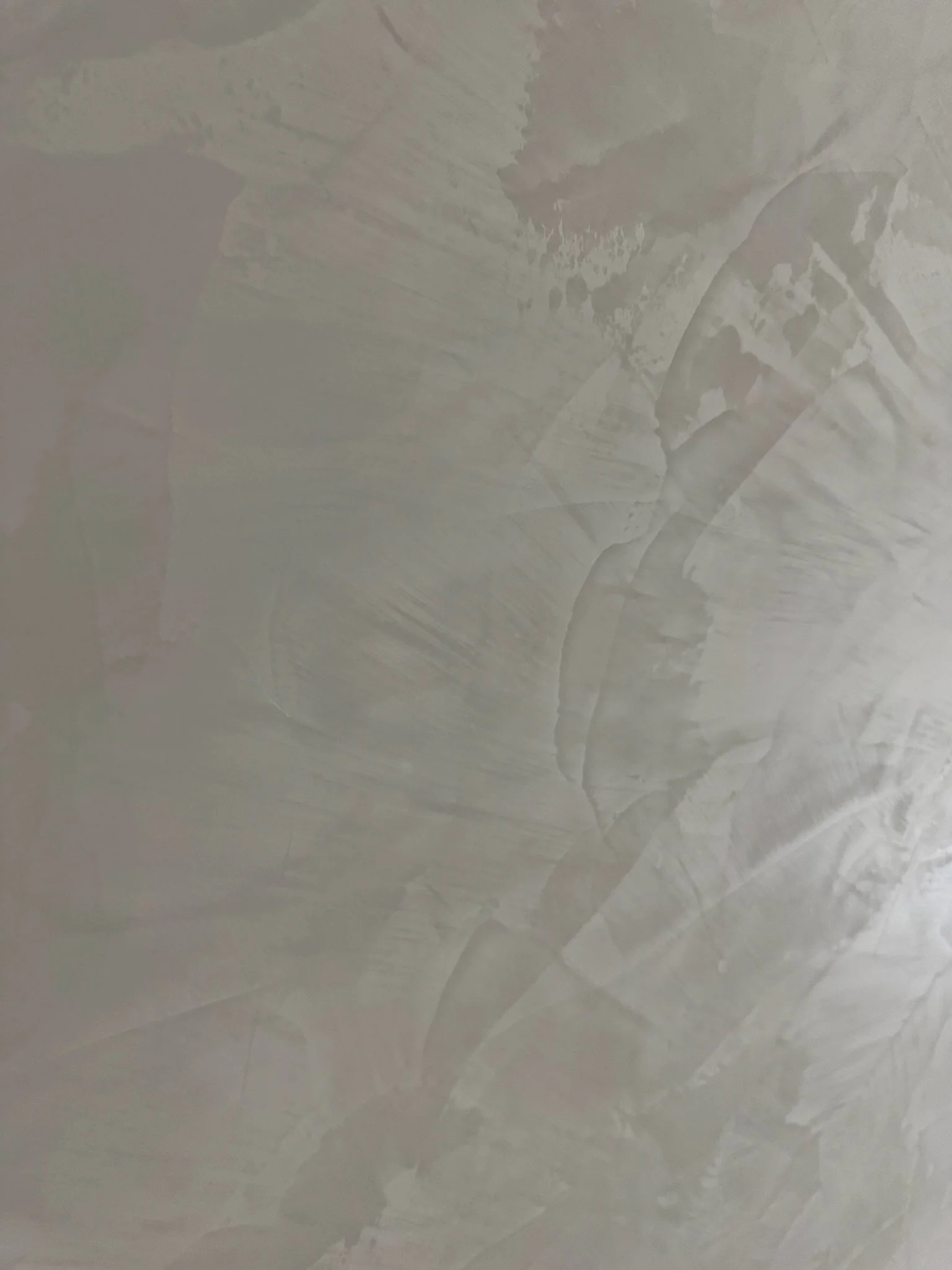
High-gloss polished Venetian Plaster
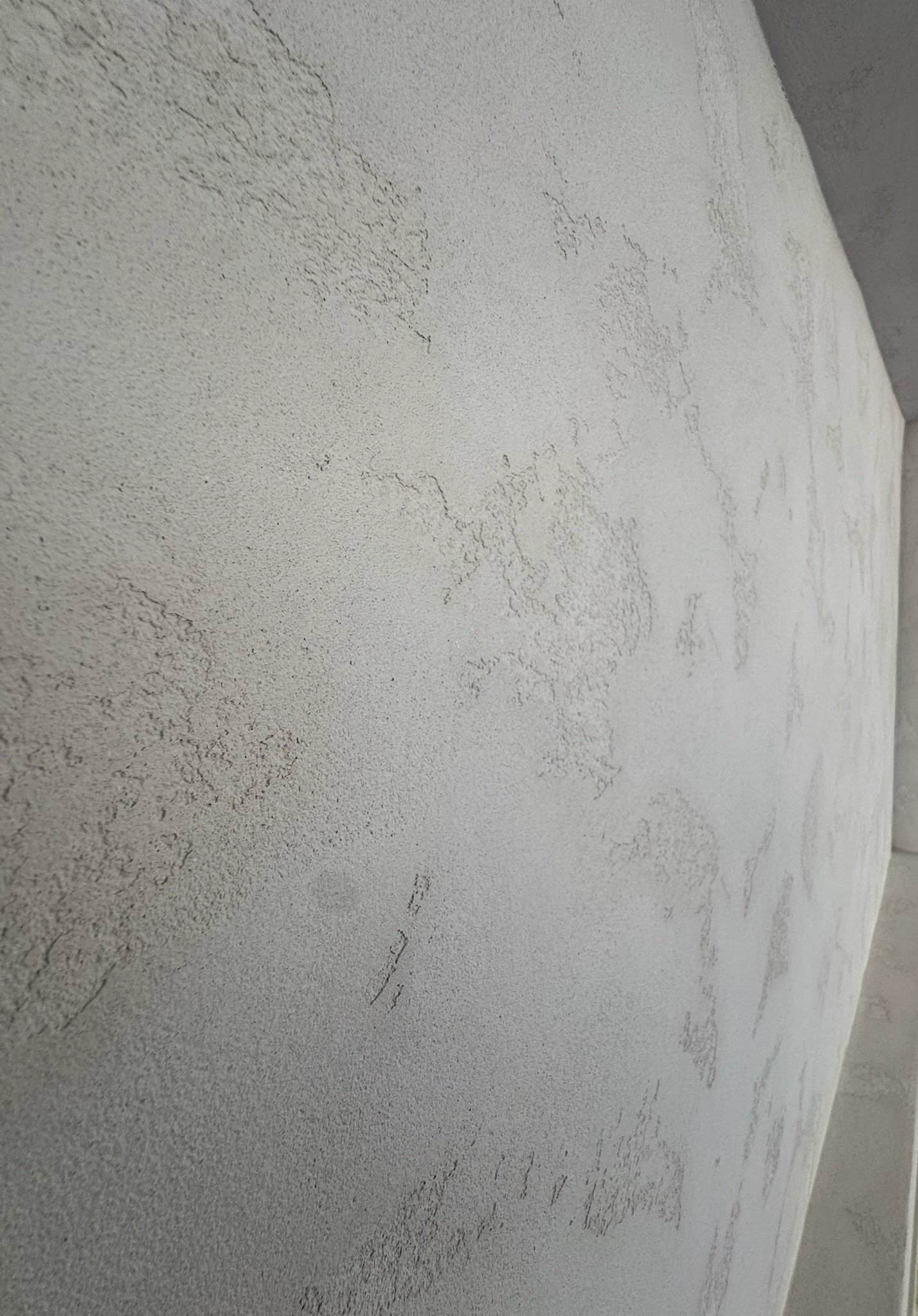
Textured lime-based Plaster
Seamless microcement
Venetian Plaster vs Microcement: A Melbourne Applicator's Honest Guide
Most of what's written on this topic is by people selling one or the other. We apply both every week across Melbourne — so here's the actual difference, where each one belongs, and what each costs.
The one-line answer: Venetian plaster is a lime-based decorative finish for walls and ceilings — depth, movement and a surface that feels like stone. Microcement is a cement-based coating engineered for hard wear — floors, benchtops and full wet areas. They sometimes overlap on feature walls; they are not interchangeable everywhere else.
The two materials, plainly
Venetian plaster is slaked lime and marble dust, applied by trowel in multiple thin coats and burnished to anywhere from a matte, stone-like surface to a deep polished sheen. It's the finish behind the "organic luxury" look Melbourne designers are specifying in 2026 — but it's not a trend product; it's how Italians have finished walls for centuries. Lime is naturally alkaline (mould-resistant), breathable and repairable.
Microcement is a modern polymer-modified cement coating, applied at 2–3 mm over almost any sound substrate — including tiles, screeds and joinery. Sealed properly, it's waterproof and takes foot traffic, which is why it's the go-to for seamless floors and walk-in showers.
Side-by-side
| Venetian plaster (lime) | Microcement | |
|---|---|---|
| Best for | Walls, ceilings, fireplaces, feature walls | Floors, showers, benchtops, splashbacks |
| Look | Depth, movement, natural variation | Uniform, contemporary, seamless |
| Feel | Warm, stone-like, can be polished to a sheen | Harder, matte to satin |
| Wet areas | Yes on walls, with the right system and sealing | Yes — including floors and shower bases |
| Floors | No | Yes |
| Breathability | High — lime lets the wall breathe | Low once sealed |
| Mould resistance | Naturally alkaline — inhibits mould | Relies on sealer integrity |
| Repairability | Blends and re-burnishes well | Patch repairs harder to hide |
| Typical installed cost | ~$180–250/m2; | walls $200–250, floors/wet areas $350–450/m2; |
| Longevity | Decades; ages gracefully into patina | 10–15+ years with sealer maintenance |
Costs are typical Melbourne ranges — see our Venetian plaster cost guide for the full breakdown.
Which one for your project?
Living areas, bedrooms, hallways, ceilings — Venetian plaster. This is what lime plaster is for. Light moves across it during the day in a way flat paint and microcement can't replicate. In period homes — Melbourne's Victorians and Edwardians — lime is also the technically correct choice, because the walls were built to breathe.
Bathroom walls — either, honestly. A lime-based system like TRAVERTINO STYLE with the correct sealer handles steam beautifully and stays mould-resistant by chemistry, not by coating. Microcement wins if you want walls and floor as one continuous surface.
Shower floors, bathroom floors, benchtops — microcement. Lime plaster doesn't belong underfoot or under a chopping board. Anyone who tells you otherwise is selling you a repair job.
Feature walls — comes down to the look. Venetian plaster for warmth, movement and a natural-material story; microcement for a crisp concrete-look aesthetic.
The material matters as much as the choice
The gap between a mediocre and a beautiful result isn't just the applicator — it's the system. We work with Elf Decor, a European lime-coatings house we represent exclusively in Australia. Finishes like TRAVERTINO STYLE (a travertine-stone effect in lime) and GROTTO (a textured mineral finish) are genuine lime systems, not acrylic imitations — which is what gives them the depth, breathability and longevity described above. Many "Venetian plaster" products on the Australian market are acrylic-based; they look similar in a photo and behave very differently on a wall for ten years.
What we'd tell a friend
If it's a floor or a shower base, it's microcement. No debate.
If it's a wall you'll look at every day, lime Venetian plaster will still be the better surface in twenty years.
If your builder or painter says they "also do" Venetian plaster, ask to see burnished lime work in person — not photos. Both materials are unforgiving of inexperience.
FAQ
Is microcement cheaper than Venetian plaster? Not usually. Materials are comparable; microcement often costs more installed because of the substrate preparation and multi-coat sealing floors and wet areas demand.
Can you put Venetian plaster in a bathroom? On walls, yes — with a lime system rated for wet areas and correctly sealed. Not on shower floors; that's microcement territory.
Does Venetian plaster crack? Applied over a properly prepared, stable substrate, lime plaster is very stable — and unlike cement coatings, small repairs blend invisibly because the material re-burnishes.
Which is better for a period home? Venetian plaster. Lime breathes with the original masonry the way modern acrylics and cement coatings don't.
Do you supply the materials or apply them? Both. We apply Elf Decor systems across Melbourne, and as the exclusive Australian distributor we also supply other applicators. Either way, you're dealing with the people who know the material best.
See the difference in person.
Request a sample board of TRAVERTINO STYLE or GROTTO, or send us your plans for an honest recommendation